The Deflationary Doom Loop
When chatbots become agents, the layoffs accelerate — and a frightened workforce starts to hoard. Here is the macroeconomic trap that could follow, and the one physical fact the utopian story keeps forgetting.
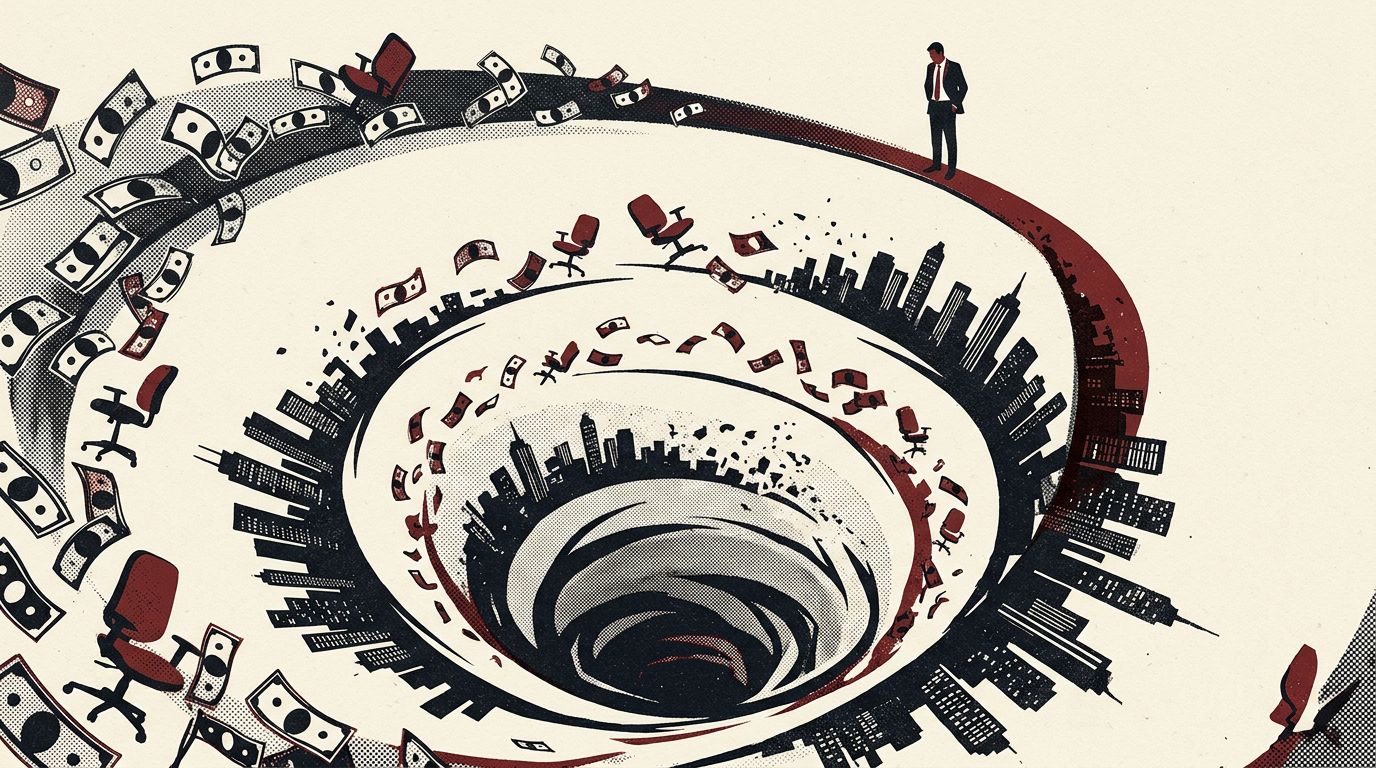
Epistemic status: a serious thought experiment, not a prediction. The argument chains together mechanisms economists already understand. Whether they actually combine this way is the open question — the counter-case gets its own section at the end.
Adapted from a thread by @shdu11546816 on X ↗.
The Paradox of Thrift
Saving is virtuous for a household and dangerous for an economy. This is one of the oldest counter-intuitive results in macroeconomics: when everyone tries to save more at the same moment, total demand falls. Lower demand means lower revenue; lower revenue means layoffs and wage cuts; lower incomes frighten people into saving even harder. One person’s spending is another person’s wage, all the way down.
The loop is not a metaphor. It is an accounting identity wearing a human face.
Drag the slider below to raise the savings rate — to dial up the fear — and watch output spiral down to a new, smaller equilibrium. The model is deliberately simple: a Keynesian income-expenditure multiplier where the economy settles at output = autonomous spending ÷ savings rate.
The cruel twist: when everyone hoards at once, income falls until the dollars actually saved are the same as before — the economy just runs smaller and poorer. Individual prudence becomes collective self-harm.
For ninety years this stayed mostly theoretical, because mass simultaneous panic was rare and brief. What if a single technology could trigger it across the entire white-collar economy at once?
Chatbots were a demo. Agents are a workforce.
A chatbot answers. An agent acts — it plans, executes, calls tools, and closes the loop without a human in the seat. That distinction is the whole ballgame. A tool that assists a worker raises their output; a tool that replaces the worker removes their paycheck. The first is a productivity story. The second is a demand story.
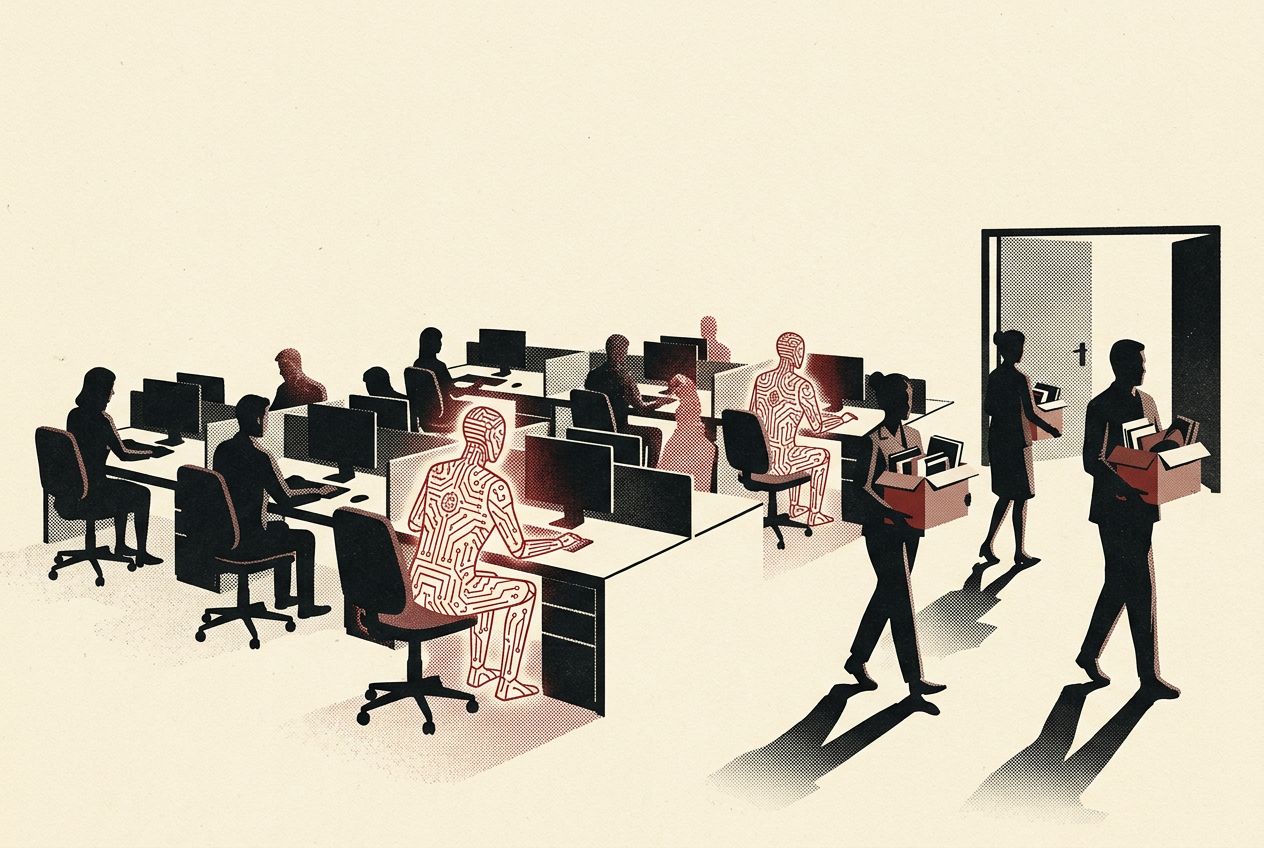
The exposed cohort is not the usual one. Previous waves of automation hit factory floors and loading docks. This wave reaches first for the people who were told they were safe: software engineers, lawyers, analysts, copywriters, marketers, middle managers — high-income knowledge workers whose entire job is producing text, code, and decisions. They are also, not coincidentally, the people with the most discretionary spending to withdraw.
The first dominoes to fall are the ones holding up the most demand.
The Physical-Labor Glut
“Just learn a trade” is the standard reassurance — robots can’t fix a leaking pipe or turn an elderly patient. True. But it mistakes a personal escape route for a collective one. If a handful of displaced analysts retrain as electricians, they do fine. If millions do it at once, they are not escaping the glut — they are the glut.
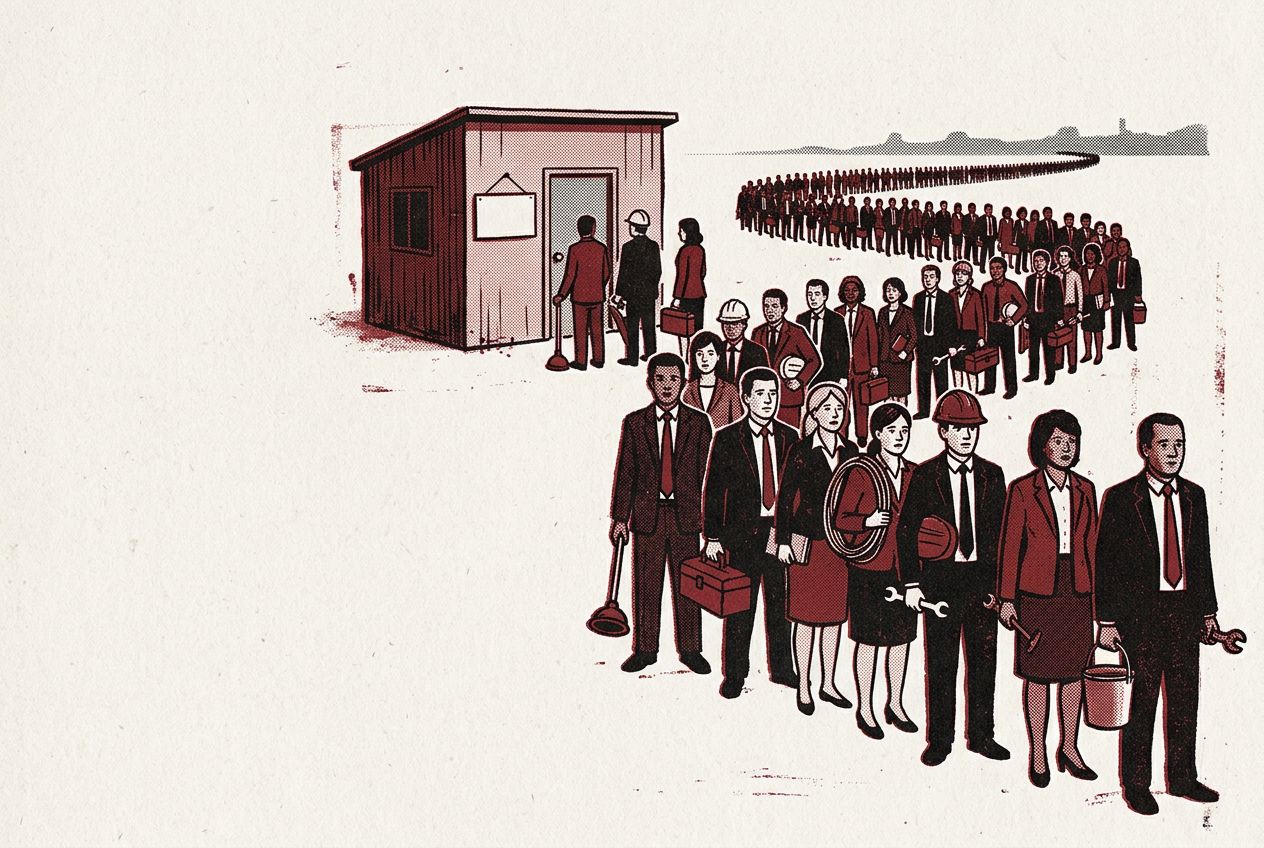
Demand for plumbing, wiring, construction and elder care is real but inelastic: there are only so many homes to rewire and patients to lift, and that number does not jump just because the labor supply tripled. Pour displaced cognitive workers into a fixed pool of physical jobs and the supply curve marches right while demand sits still. Wages go where they always go in a glut: down.
Demand for plumbers, electricians and carers is real but inelastic — there are only so many pipes to fix. Pour millions of refugees from cognitive work into that fixed demand and the supply curve marches right. The wage slides toward the only floor left: enough to eat.
The Wage-Floor Collapse
Push that slider far enough and the clearing wage settles onto a floor — roughly the cost of calories and a crowded room. Not because employers are cruel, but because when ten people will do a job for the price of survival, survival becomes the price. Meanwhile the same fear that follows the layoffs makes everyone who still has income hoard it. Discretionary spending — restaurants, travel, the second car, the renovation — is the first thing to go.
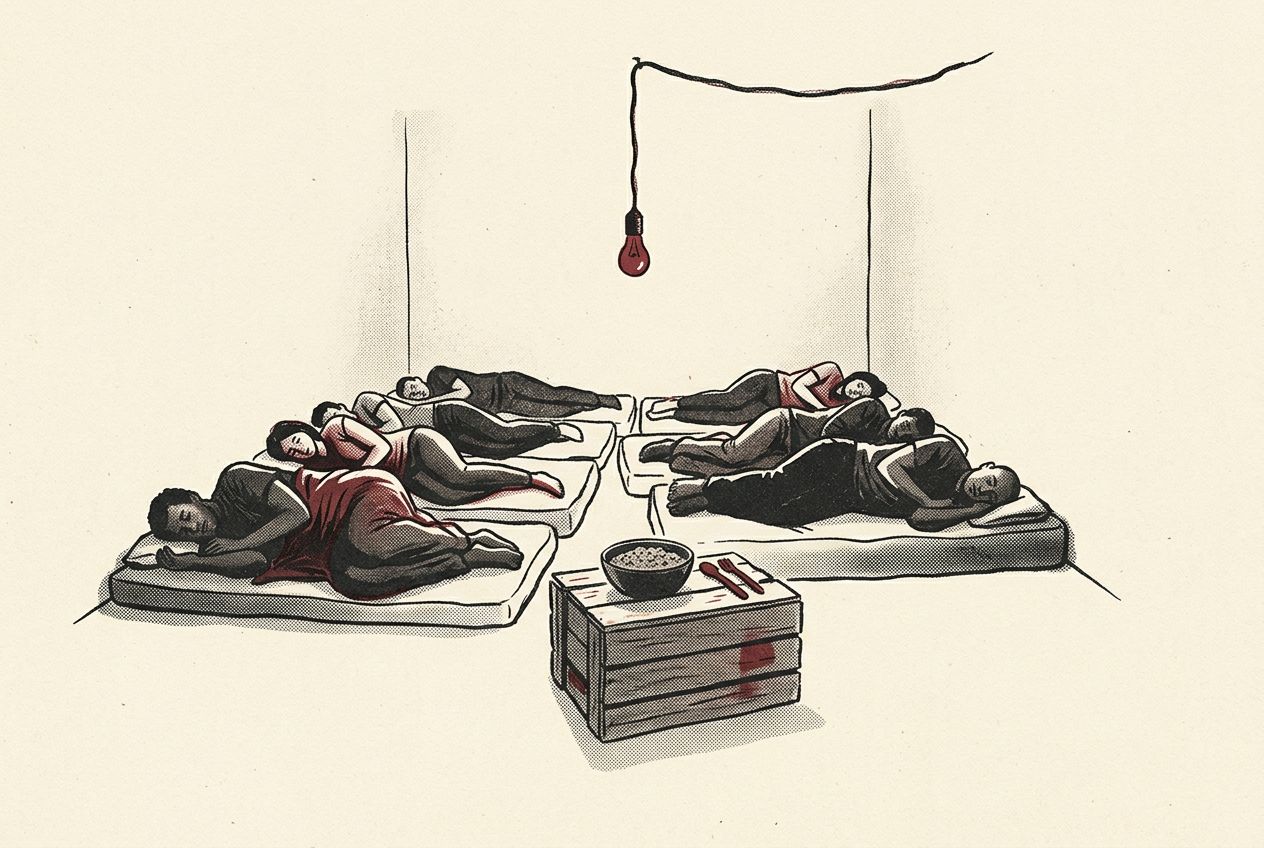
And there is the loop, completed. Layoffs cut incomes. Fear cuts spending further. Lower spending cuts revenue, which cuts more jobs and more wages. Each turn tightens the next. Except this time the trigger is not a financial shock that passes — it is a permanent change in what human labor is worth.
“But everything becomes cheap and abundant.”
This is the optimist’s rebuttal, and it is half right. When intelligence costs almost nothing, anything bottlenecked on intelligence gets radically cheaper — software, design, analysis, tutoring, diagnosis, entertainment. Deflation in those goods is real and wonderful.
The flaw is in the word everything. Look at where a working household’s money actually goes.
Shares approximate the U.S. Bureau of Labor Statistics Consumer Expenditure Survey.
Two-thirds of the budget is rent, transport, food and care — things made of land, energy, calories and human hands, not thought. Cheaper intelligence barely touches them. So the optimist’s deflation and the pessimist’s deflation are two different prices moving in opposite directions:
“Everything becomes cheap” is true — for everything that is made of thought. The line that matters for survival is the flat one. Your landlord does not accept tokens.
The Thermodynamic Wall
Intelligence is not the binding constraint on physical resources. You can think as hard as you like and the laws of physics do not move. This is the wall the abundance narrative runs into:
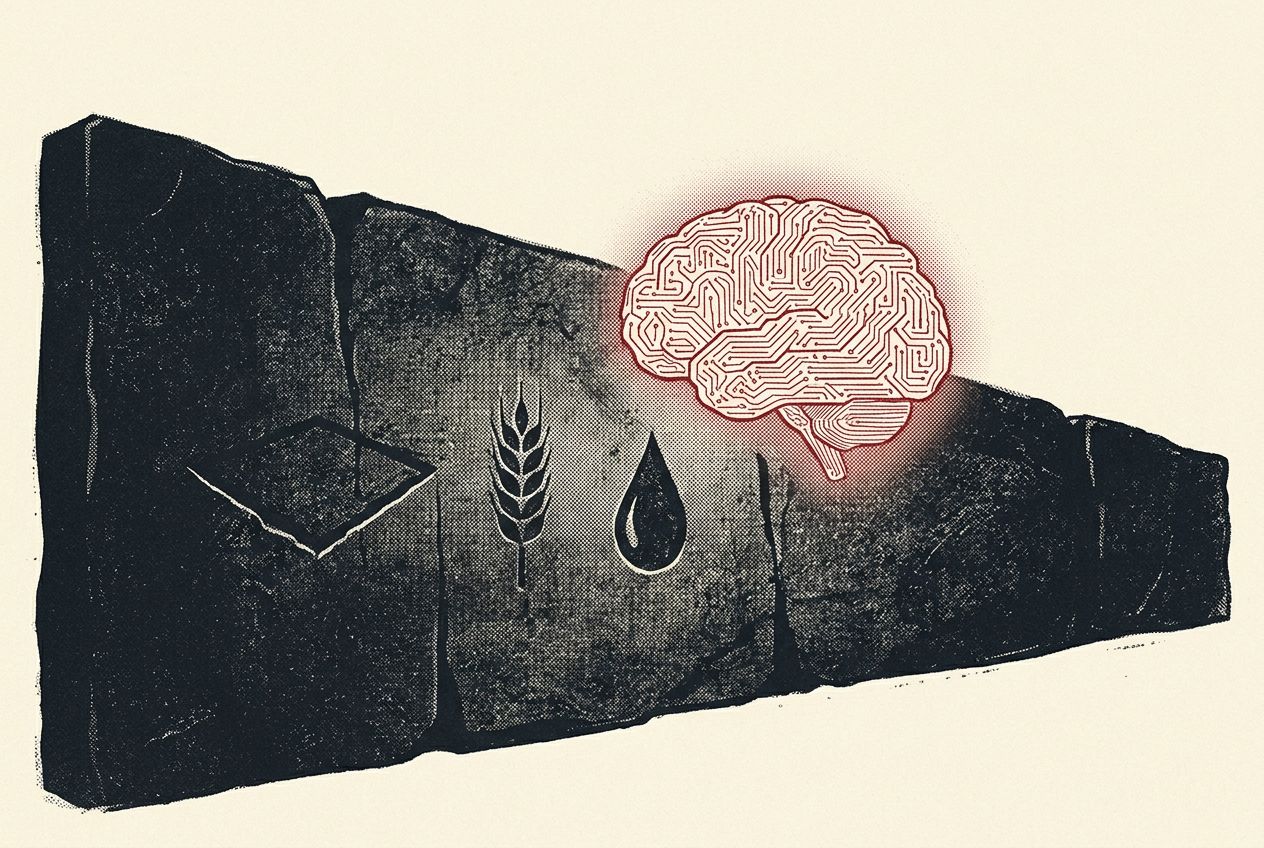
AI cannot print more acreage in desirable zip codes. Location is rivalrous by definition — the supply of 'near the good jobs and schools' is fixed.
No amount of cleverness repeals thermodynamics. A gallon of gasoline holds a fixed amount of energy; efficiency has hard physical ceilings.
Food is captured sunlight. Photosynthesis is ~1–2% efficient and arable land and fresh water are finite. You cannot reason a harvest into existence.
Software eats the world only where the world is made of software. Rent, fuel and food are made of atoms, and atoms remain stubbornly scarce no matter how smart the machine asking for them.
A K-shaped world
Put it together and the economy does not rise or fall as one — it splits. The owners of the machines, the land, and the capital capture the gains from cheap intelligence. The people who used to rent out their minds for a living watch the price of that rental collapse while the price of survival holds.
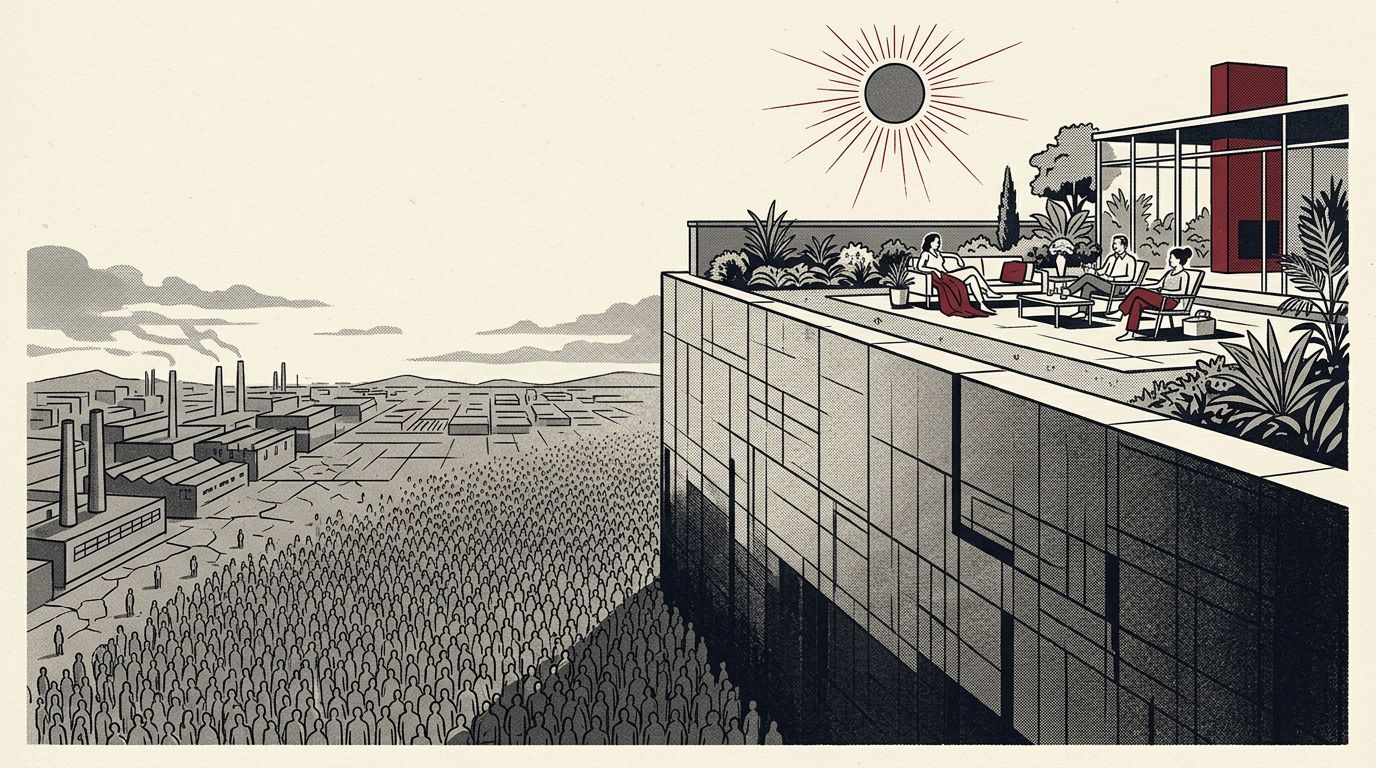
At which point the essay’s most uncomfortable phrase has to be said out loud. The fear is that a large share of the population — the original claim puts it at two-thirds — becomes what the brutal old euphemism called “useless eaters”: people who consume but, in pure market terms, no longer produce anything scarce enough to be paid for.
The phrase is deliberately ugly — its origin is a Nazi term, unnütze Esser. It is used here precisely because the condition it names is morally intolerable. People are not “useless”; a system that prices them at zero is the thing that has failed. That moral revulsion is the point, not a footnote.
● retains scarce, paid value · ● economically redundant. Two-thirds become economically redundant.
Where this argument might be wrong
A scenario you can’t argue against isn’t analysis, it’s prophecy. Here are the strongest reasons the loop might never close — and why each is contested.
The race that decides everything
Strip away the drama and the whole scenario reduces to a race between two curves you have already seen on this page: how fast the cost of human labor falls versus how fast the cost of physical necessities follows it down. If atoms get cheap roughly when minds do, the optimists win and we inherit abundance. If there is a lag — and physics, land and politics all suggest a lag — then the gap between those two curves is where a third of the workforce lives, with collapsing wages and rent that won’t move.
The Paradox of Thrift turned a private virtue into a public trap once before, in the 1930s. The uncomfortable thesis of this page is that intelligence too cheap to meter could pull the same trap shut — not because the machines are cruel, but because demand is made of paychecks, and paychecks are exactly what is being automated away.
Abundance for things made of thought. Scarcity for things made of atoms. The danger is that most people spend their lives buying atoms.
The original argument — “deflationary doom loop,” the physical-labor glut, and the “useless eaters” framing — comes from a thread by @shdu11546816 on X ↗. This page develops it with interactive models and the counter-case.